Very rich century, many important things happened in this period of the Low Middle Ages. Very significant changes were occurring in the society. There arose a class of people that did not live in the countryside, but in the cities that were being constructed: the bourgeoisie.
The first artisans appeared, who produced goods using their abilities and commercialized them to acquire that which they needed, for they did not possess aptitude for the cultivation of the land. Thus, the commerce was developing and strengthened itself the idea of the currency and of the barter.
Christianity lost a little of its strength because it lived the apex of the Crusades (military expeditions) in this century. They had begun in the previous century, by order of the pope Urban II. These expeditions departed from Europe toward the Holy Land to recover the tomb of Jesus, that was in the hands of the Muslims, and to retake the territories that had been conquered, opposing themselves to the expansion of Islam. The Christians managed to recover Israel after a bloody battle, in which occurred a great mortality, including of civilians.
Jerusalem was, until this moment of the history, under the domain of the Christians, whose king was Baldwin IV, who possessed a striking characteristic: he was leprous. Even so he became king and exercised great authority over his commanded ones, conquering numerous victories against the Muslims. He obtained triumphs, including, against that one who would be later known as Salah ad-Din Yusuf ibn Ayyub (Saladin).
However, Saladin was improving himself, gaining notoriety and, advancing through the north of the territory of Israel, conquering regions.
In this interval of time propagated itself a false news that the pilgrims were being mistreated by the Muslims. This stirred with the pride of the Christians. Historians affirm that it was about a propaganda launched to stimulate the Christians to go to the fight.
The religious authority of the time promised, to whoever participated of the Crusades, the absolute forgiveness of all his sins. What motivated these men to fight and deliver their lives was exactly this absolution of their faults. The strength of the papacy, in that period, was very great; therefore, it was worth it to fight, to have the sins redeemed and to reach the heaven...
The Second Crusade organized itself by initiative of the French king Louis VII and of Conrad III, king of Germany. The great objective was to retake the Counties that had lost to the Muslims. Besides these two kings, a French monk also fomented this incursion, Bernard of Clairvaux (Saint Bernard, canonized only twenty and one years after his death by Pope Alexander III), of the Religious Order of the Cistercians, arisen in the eastern part of France. They were known as “white monks”, due to the color of their habit, to differentiate them from the Benedictine monks.
They would fight moved by a profound religious feeling, that is, to recapture the territories that had lost, for they believed that this was the will of God. Thus they thought... However, the participants of this Crusade were practically decimated by the Muslims.
Before this failure, the pope did not accept the defeat. It was necessary to organize another Crusade, the third, but this time it should be “the Crusade”, formed only by kings. They were: Philip II, king of France; Frederick Barbarossa (Red Beard), ruler of the territory that today corresponds to Germany; and Richard Lionheart, king of England. Together, they formed the Third Crusade and departed to the fight..
One of them, however, the king Frederick Barbarossa, did not even arrive to the battlefield, for he died drowned in a river during the journey. The other two reached the destination, but the king Philip II, upon perceiving that the conditions were difficult and precarious, returned to his kingdom, for he understood that to remain in France would be more advantageous to him. The king Richard Lionheart went forward, fighting alone and managing to reconquer some territories. However, he ended up being defeated by Saladin.
Saladin was a sultan of the Ayyubid dynasty, that substituted the Fatimid dynasty in Egypt. He possessed special characteristics and entered into history as a docile and compassionate man, quite different from the other sultans. Extremely intelligent, endowed with great military abilities and of very elevated character, he stood out in the Crusades for his nobility and for the form how he fought.
There is a passage of him, among others, in the Crusades in which Saladin was warring against the king of England, Richard Lionheart. In this combat, the horse of the king Richard was struck down, and the king continued to fight, even so. A Christian knight removed him from the battlefield and took him to the Christian camp. Without knowing how he would continue the war without his horse, he received, in that same night, the visit of a Muslim bringing two Arabian horses. The messenger announced that Saladin had sent them as gift to the king, for he would not like to fight him, deprived of a horse...
On another occasion, when both were in combat, the Muslim soldiers, instead of attacking directly the Christian army, invested against those who transported the supplies to the camp of the Christians, leaving them without provisions for the war. Saladin then sent fresh fruits and a meal to the camp of the king Richard Lionheart, so that they could fight in equality of conditions, for he understood that the kings needed to be well fed for a good combat...
On another battle, the king Richard was wounded. Saladin sent his own doctors to treat him. The king Richard was so impressed with his adversary that he proposed the peace between them. An alliance of marriage between his own sister, Joanna (Queen widow of Sicily), and the brother of Saladin, Al-Adil. Thus they would divide peacefully the control of Jerusalem and of the other territories. Saladin did not agree, for it would not be possible that a Muslim marry with a Christian...
The king Richard Lionheart was a great combatant and one of the principal names of this Crusade, for he conquered various victories. However, in the end, Saladin won the dispute and, when he entered triumphant in Jerusalem, the Christians began to run and to hide, fearing to be killed. Saladin told them that they not have fear, for he did not intend to kill them; he would not gain anything with this. He declared still that, from there forward, they would have freedom of worship, that Muslims and Christians could live together and that only would be fought those who did not accept his authority as ruler, passing the others to work under his domain.
He was a warrior that killed, fought and shed much blood, but, within the standards of the time and of that which was expected of a Muslim sultan, he showed himself quite compassionate. After the conquest of Jerusalem, the defeated king was not killed, for, according to it was said, “a king does not kill another king”. The king Richard was spared to return to his kingdom.
Saladin appreciated the science and the artistic development. It was a time in which he sought to encourage again the arts, the studies and the sciences. There was, then, a period of beautification of the Arab culture through the conquered territories.
Another very interesting fact: before dying, he donated all his goods to the charity, remaining with nothing. When of his death, his successors ran to his chests in the expectation of taking possession of his treasures, but, upon opening them, they discovered that nothing more existed...
Then, once more, there was, in certain way, peace between Muslims and Christians, in reason of the proximity that established itself between the king Richard Lionheart and Saladin. It was a period of greater prosperity, for the Christians returned to be able to pilgrimage to the Holy Land — a time of truce. However, the pope desired to recover the territories and would organize other Crusades that would happen in the following century.
An interesting fact about the king Richard Lionheart is that, during his participation in the Crusades, England would have remained under the government of transitory administrators, considered authoritarian and little noble. According to the tradition, a man of the people called Robin Hood would have begun to rob from the rich to give to the poor. Thus would have arisen the legend of the character Robin Hood. It is about a narrative based on popular traditions, but without definitive historical proof.
It was this a very interesting period, in which arose great intellectuals in the Islamic world. The Bait al-Hikma, the House of Wisdom, diffused knowledge through many places. Inside the court of Saladin, the scientific knowledge was widely valued. He had as his private doctor a Jew of name, Maimonides (one of the greatest rabbis, philosophers, legislators and doctor of the Middle Ages). Thus, Saladin, a Muslim that fought against the Christians, had as personal doctor a Jew.
Maimonides is one of the great names of Judaism. After Moses, he is considered by many the most important character of the Jewish religion, for, in this period of the history, he contributed to revitalize a Judaism that found itself weakened. He suffered many persecutions, and his family fled from city to city until arriving to Cairo. There he met Saladin, who, perceiving his wisdom, invited him to integrate his court, granting him great prestige. He became doctor of the court and wrote a text, among others, fundamental for Judaism, called “The Thirteen Principles of the Jewish Faith”. Maimonides is also known by the nickname of Rambam. He wrote also the work that crossed the centuries, Guide of the Perplexed, a dialogue between Aristotle, his Greek philosophy and Judaism, in which he seeks to demonstrate the harmony in the thought between these millenary traditions. This work influenced profoundly not only the Jewish thought, but all the Western Christian scholastic philosophy.
Both he and Averroes, one of the greatest philosophers, doctors and astronomers of the Islamic Golden Age of this century, provided a period of approximation between science and religion. They defended that all that which is revealed by God should be in consonance with that which is discovered by the men. There would not be how to dissociate religion from science, nor the faith from the reason. This was the proposal of both. Too beautiful!
In this period arose various Orders, and one of the principal was the Order of the Knights Templar, that were called “The Knights of Christ”. The order was created by the Frenchman, Hugh de Payens and eight more companions. He took his proposal to the king of Jerusalem, that in the occasion was Baldwin II, and later, to the pope Honorius II, who guaranteed to the Order the official recognition of the Catholic Church. The objective was to defend the Holy Land and protect the Christians that pilgrimaged between Europe and Jerusalem, both on the going and on the return.
They were very noble knights, that protected not only the pilgrims and the Holy Land, but also the own pope. The name Templars was chosen in reference to the Temple of Jerusalem, although there did not exist anymore a temple to be protected. To enter in this order it was necessary to make vow of poverty.
The Templars functioned as bankers. The pilgrims delivered to them their money before initiating the journey and received a document registering the exact amount. When they arrived to Jerusalem, they received the value back. In this form, they did not run the risk of being robbed during the course.
As they charged a portion of the money that they administered in exchange of the protection offered, they enriched quickly and counted with the protection of the pope. However, further ahead, they would end up corrupting themselves. The king of France, Philip IV, the Fair, perceived what was happening: while the Templars protected the pilgrims, were protected by the pope and accumulated riches, he saw his supremacy diminish. In the name of this supremacy, would occur the persecution and the death of the Knights Templars, fact that would occur in the following century.
The symbol of the Templars is a horse mounted by two knights, representing the humility and the poverty that they professed. The second order created was that of the Hospitallers. This order took care of the wounded and of those that had remained with sequelae in reason of the Crusades. A third order, that of Saint Lazarus, also was created by former knights that had contracted leprosy, but that continued serving Jesus.
The Muslim Empire, in 711, had conquered the Iberian Peninsula, besides many other territories. Portugal was practically all under Muslim domain. Only the Kingdom of Asturias, to the north, remained free. To defend themselves from these invaders, they needed men experienced in the combat to the Muslims. They thought in the Templars, that had already acquired military practice in this type of confrontation, and summoned them to assist them. They established, then, an agreement. The Templars went to the Iberian Peninsula, fought and won. Portugal reestablished itself as nation, contracting, thus, a debt with the Templars. This debt would be paid only in the 15th century, in a quite interesting outcome...
In 1139 occurred the Battle of Ourique. Tradition tells that D. Afonso Henriques had a vision of Jesus, in which it was revealed to him that he would defeat the Moors (as were called the Muslims originated from Mauritania). This was a decisive confrontation of that century, in which the forces of D. Afonso Henriques defeated the Moors and advanced in the conquest of the Portuguese territory. Thus, in 1148, with this fundamental victory, consolidated itself the independence of the Kingdom of Portugal, that had as first king D. Afonso Henriques.
The Kingdom of Portugal arose, then, from the Battle of Ourique, in 1139, with the aid of the Templars. It consolidated itself in 1148 from a county situated to the north, on the margins of the river Douro, called County of Portucale. Thus was born Portugal!
It had beginning in this century the study of Christianity in the universities, that were beginning to arise. The study of the faith ceased to be exclusivity of the Church, for it passed to be analyzed by means of theology, discipline that investigated the Old and the New Testament, the Canon and the origins of Christianity. Great philosophers, theologians and scholars appeared. One of them was the Frenchman Peter Abelard, whose love story with Héloïse is considered one of the most beautiful of history.
Abelard was a mature man and extremely cultured. He possessed a chair, for he was professor of theology. Héloïse was very young, practically an adolescent. He became her preceptor, her professor, but both ended up falling in love. In reason of his religious functions, he could not marry, for he had assumed the vow of celibacy. The uncle of Héloïse did not permit that they remained together and treated to separate them. During some time, they continued corresponding themselves by letters, that still exist and are studied until today.
However, before this, they had maintained a loving relationship. Héloïse became pregnant and both decided to marry secretly. Before that the marriage concretized itself, however, they were discovered by her uncle, who became enraged. By his order, Abelard was castrated and sent to a convent in Brittany. Héloïse was directed to a convent in Paris. They never more met themselves personally. They remained corresponding themselves until the end of life.
In the letters that they exchanged, they described the frustrations and the feelings that still nourished one for the other. Abelard felt himself responsible for the future that Héloïse had ceased to have. She, by her turn, also held herself responsible for that which he had ceased to realize. The son of the two received the name of Astrolabe. Some historians affirm that this name was chosen in homage to Hypatia of Alexandria, woman of vast knowledge, Neoplatonic and mathematician. She did not create the astrolabe, but contributed to expand its use. This instrument served to measure the position of the stars and assist in the maritime navigation. It was widely used by the School of Sagres, that would arise in the 15th century.
The historians tell that Abelard possessed an illuminated speech. He was a great orator and a man of immense wisdom, a true polymath. In that time, to be philosopher, it was necessary to possess knowledge of theology, and the marriage was not permitted. Wherever he passed, he enchanted the people. When they died, Abelard and Héloïse were buried together. Their bodies are found in the cemetery Père-Lachaise, in Paris.
In 1184, in the Council of Verona, in Italy, the pope Lucius III gave beginning to that which can be considered one of the most drastic movements of the history of the Church: the Holy Inquisition. It departed from the idea that it was necessary to defend the faith and create a system by which all that one who opposed himself to the apostolic, catholic and roman faith were taken to judgment. In this tribunal, the person would have the opportunity to abjure his convictions or would be condemned to death, so that the evil that had led him to act in that form be purged.
This movement not only intended to defend the faith, but also despoiled people, mainly Jews. Innumerable processes ended with the confiscation of their goods. How many Muslims, simple women considered witches, magicians and other people were taken to the tribunals of the Inquisition! In Portugal, the Inquisition obliged the Jews to change of name. There arose, then, many Silveiras, Oliveiras and other surnames adopted by converted Jews.
In this century, more precisely in 1163, began the construction of the Cathedral of Notre-Dame (Our Lady), in Paris, in Gothic style. It was a homage of the Goths, a barbarian people, to the Mother of Jesus. At the time, the construction was considered by many an ugly monument. However, today it is recognized as one of the most beautiful cathedrals of the world.
There was also, in this period, the expansion of innumerable churches through the world. According to some historians, five hundred notable churches were erected only in France. One sought to confront symbolically the Muslims by means of the imposingness and of the grandiosity of these constructions, demonstrating the power, the strength and the glory of Christianity.
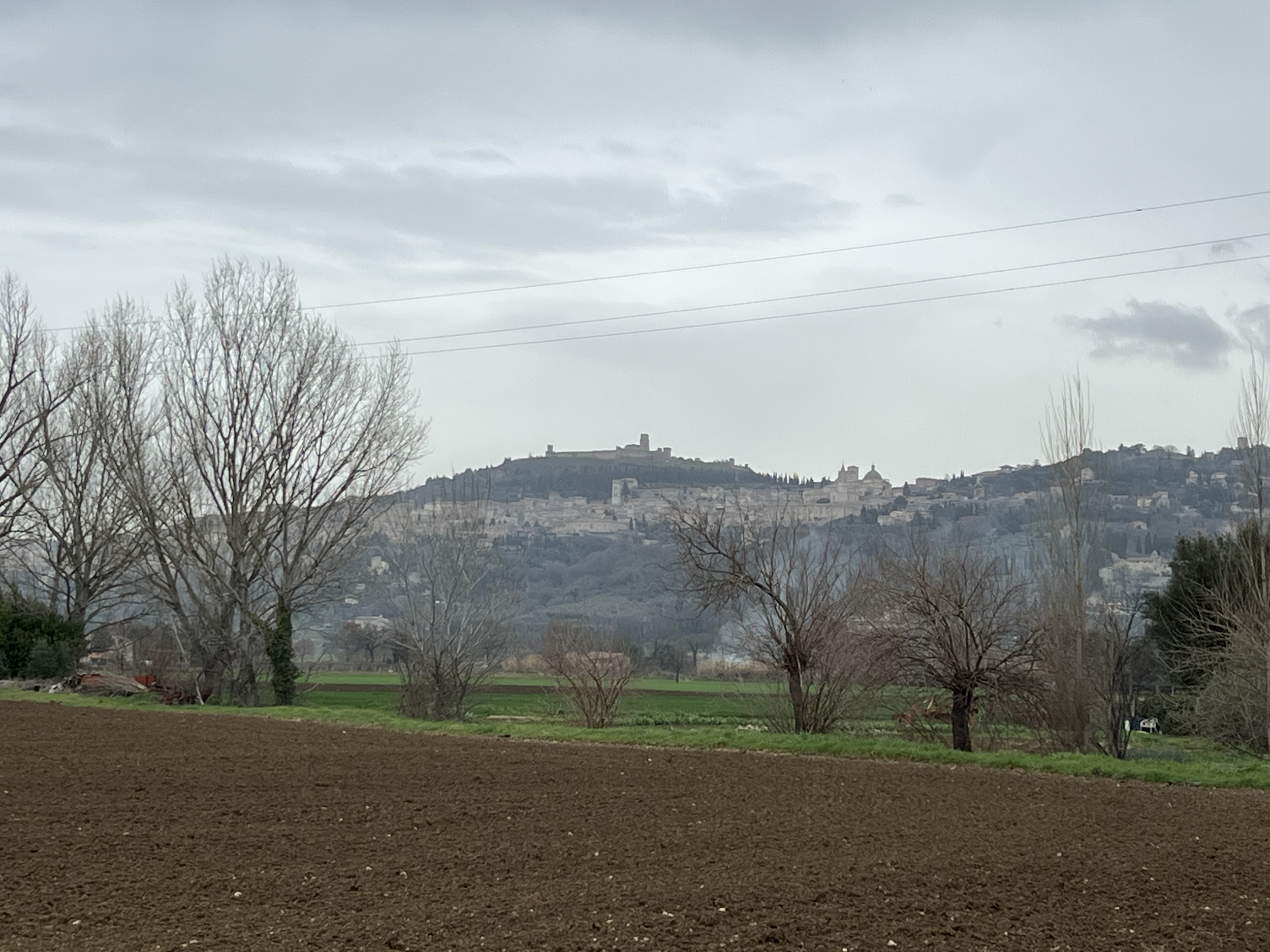
There was born, at the end of this century, precisely on the day 3 of October of 1182, that one who would come to reform profoundly the Church of Jesus: Francis of Assisi...
The Twelfth century
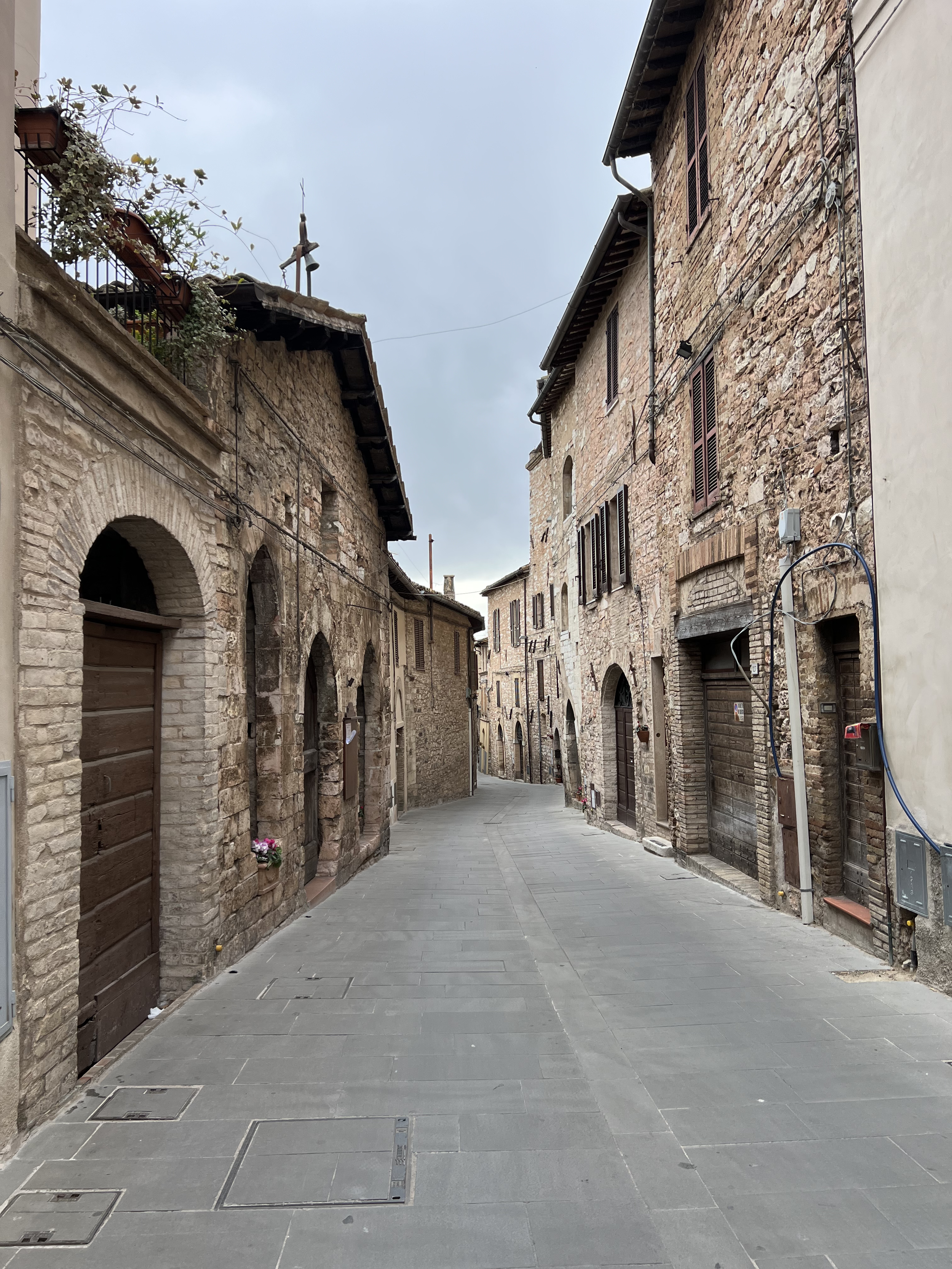
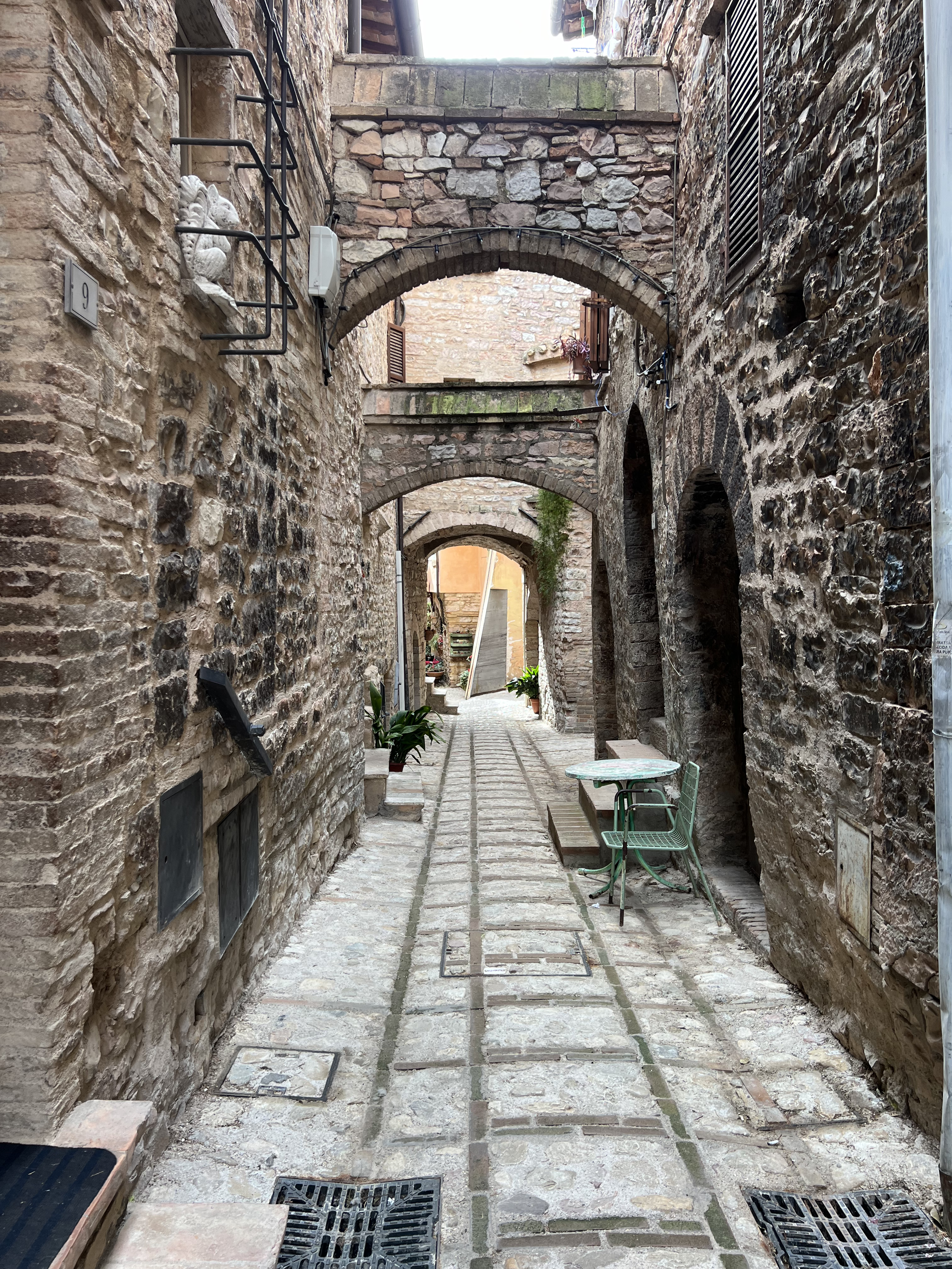
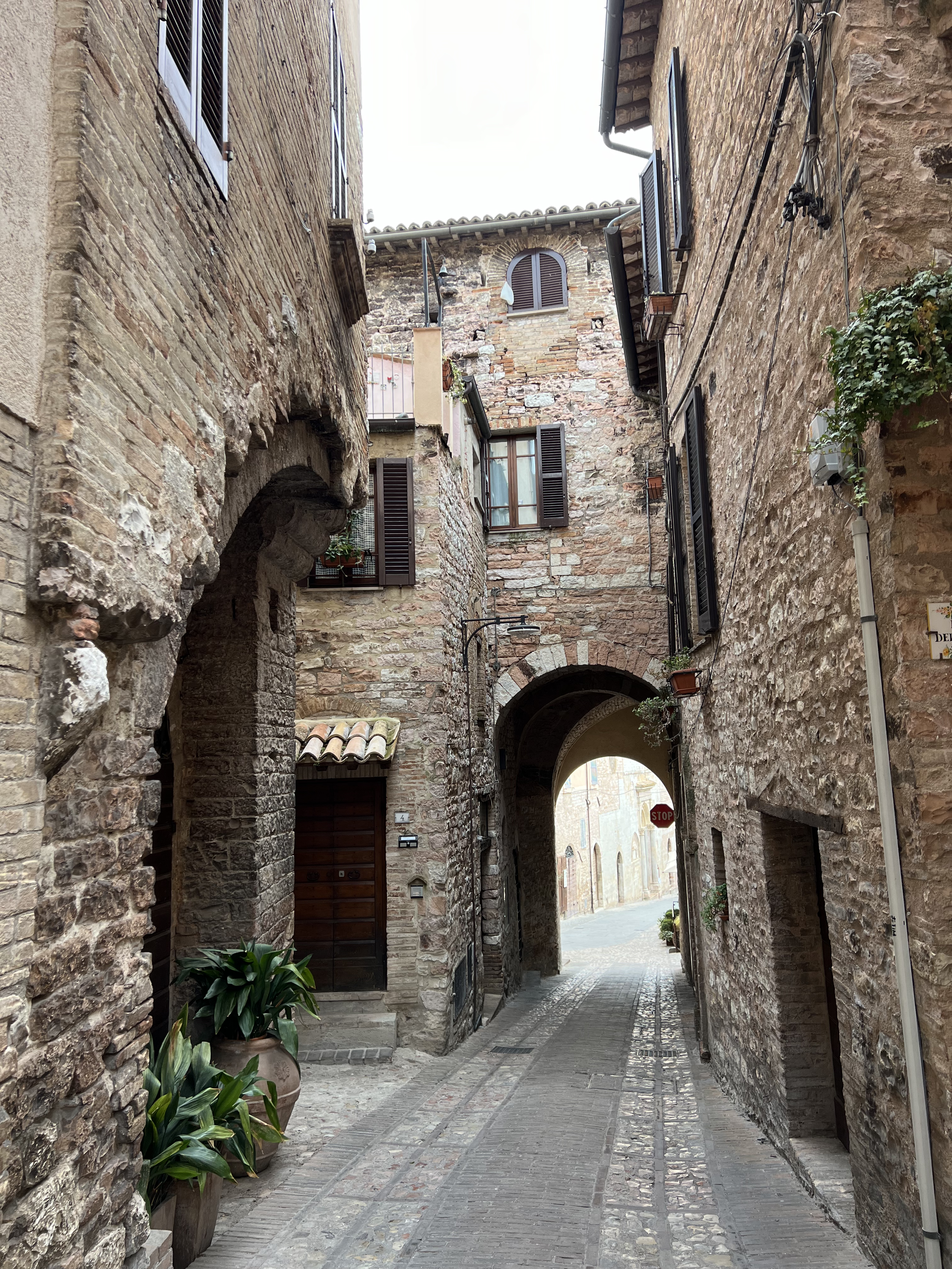
City of Saint Franics,
Assisi